
When Self-Care Feels Like a Chore

By mid-January, the glow of new year, new me has usually worn off.
The energy we were supposed to magically have by January 1st never really showed up, and now we’re back in real life, trying to get kids back into school routines, catch up from the holidays, and remember what day it is.
So when I hear “self-care” in January, my first response isn’t inspiration.
It’s more like: Ughhhhh.
Big, intentional self-care feels wildly unobtainable right now, and there’s a particular kind of frustration that comes from feeling like you’re failing at something before you’ve even had a chance to start.
The fantasy version of self-care
At some point, I became convinced that bullet journaling would be the thing.
Not casual bullet journaling, but the kind with hand-drawn trackers, carefully laid out calendar pages, and space devoted to tracking water intake, movement, and mindfulness. I was craving creativity and structure, and I wanted something that felt like mine.
What I didn’t account for was how much time I would spend just trying to make the pages look right.
All of my creative energy went into designing the system instead of actually using it. The goals themselves never stood a chance, not because I lacked discipline, but because my life didn’t have room for that level of upkeep.
That version of self-care didn’t fall apart because I didn’t try hard enough. It fell apart because it asked for more time and consistency than I had.
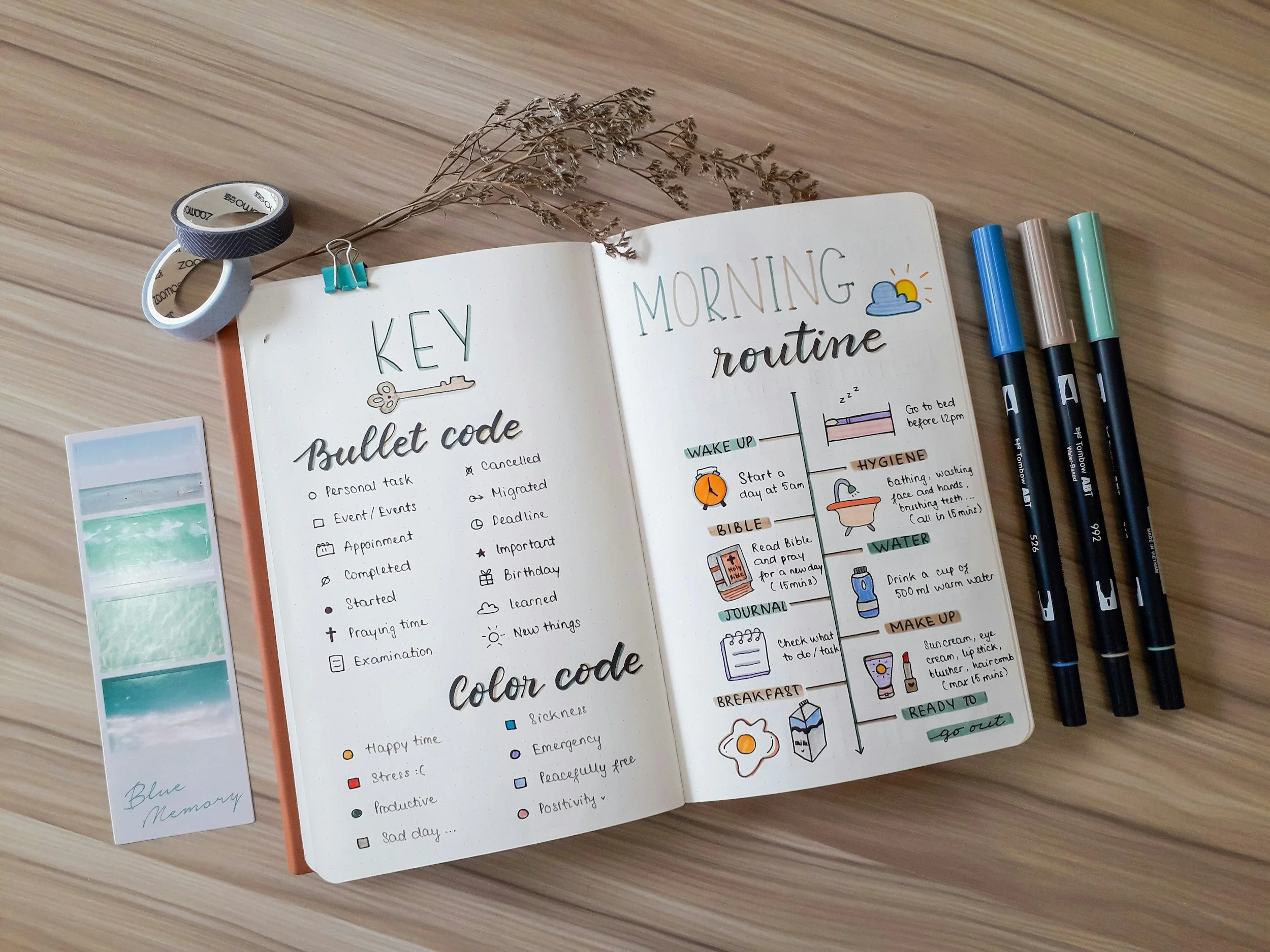
When self-care becomes another job
There are parts of me that would genuinely love a 20-step skincare routine or the idea of making everything from scratch, including the bread and butter.
And there are also parts of me that get really frustrated when my days don’t cooperate with those visions. When kids need something unexpectedly or plans change, the parts that want self-care to be done well can feel irritated and stretched thin.
Those parts usually have very high expectations and a clear picture of what they want life to look like. The tension isn’t that the desire is wrong. It’s that the version of self-care they’re aiming for doesn’t match the reality they’re living in.
I see this in the therapy room all the time
When self-care comes up in therapy, I often notice clients starting to explain themselves. They want me to know they tried, that they cared, that they weren’t just avoiding it.
It can sound a bit like explaining why homework didn’t get done, even when the assignment was optional.
There’s often a lot of self-blame tied to not keeping up with the things they used to do before a major life change. Reading for pleasure is a common example. “I used to read all the time, and now I can’t remember the last time I finished a book.” The loss feels real, but the expectation to return to that version of life often creates more pressure than support.
In those moments, we’re usually not trying to force old habits back in. We’re getting curious about what that reading time provided and where that same feeling might already be showing up in smaller or different ways.

Why obligation changes everything
Some parts of us actually love structure and plans. They feel safer with timelines and goals. The problem is that those parts often push far beyond what’s realistic, especially when they’re trying to help us feel better quickly.
When self-care turns into something we feel we should be doing, the body responds very differently than when it feels like a choice. Instead of support, it can start to feel like pressure. Instead of relief, it becomes another standard to keep up with.
At that point, self-care stops feeling like care and starts feeling like one more area where we’re measuring ourselves.
So what is self-care, really?
Self-care isn’t a routine to master or a habit to perfect. It’s a way of staying connected to yourself, especially when life is demanding more than usual.
Sometimes that looks intentional and spacious. Other times it looks small, responsive, and very unglamorous.
If self-care feels like a chore right now, that’s not something to override or fix. It’s information. It might be pointing to parts of you that are tired of pressure and expectations and need something gentler than another goal.
January tends to come with a lot of messages about becoming better, more disciplined, or more optimized. But often, what actually helps is noticing what already feels steady or grounding within the life you’re currently living, even if it doesn’t look like what self-care is supposed to be.
And even if it would never make it into a planner.
